

















Table of Contents

The era of single AI models working in isolation is rapidly giving way to a far more powerful paradigm: multi-agent AI orchestration. In this approach, multiple specialized AI agents work together, communicating, coordinating, and collaborating to solve complex problems that no single agent could tackle alone. From autonomous research teams to sophisticated software development pipelines, multi-agent systems represent the cutting edge of artificial intelligence and are reshaping how organizations think about AI deployment.
According to Gartner’s 2025 AI Hype Cycle report, multi-agent AI orchestration has moved past the peak of inflated expectations and is now entering the trough of disillusionment, which means practical, production-ready implementations are becoming reality. Industry analysts project the multi-agent systems market will exceed $45 billion by 2028, driven by demand for more sophisticated automation, better decision-making, and the ability to handle nuanced, multi-step tasks. This guide provides everything you need to understand, design, and implement multi-agent AI orchestration in your organization.
What Is Multi-Agent AI Orchestration?

Multi-agent AI orchestration refers to the coordination and management of multiple AI agents, each with specialized capabilities, that work together to accomplish complex tasks. Think of it as assembling a team of experts, where each member brings unique skills to the table, and a conductor ensures they work in harmony toward a common goal. The orchestrator manages task allocation, inter-agent communication, conflict resolution, and the integration of individual agent outputs into a cohesive final result.
This concept differs fundamentally from single-agent AI in several important ways. A single AI agent, no matter how capable, has inherent limitations. It has a fixed context window, a specific set of capabilities, and operates in relative isolation. Multi-agent systems overcome these limitations by distributing work across specialized agents, each optimized for a particular aspect of the task. A research agent might gather information, a writing agent might draft content, an analysis agent might evaluate quality, and an editing agent might refine the output.
The orchestration layer is what makes this possible. It defines the workflow, manages the handoffs between agents, ensures that information flows correctly, and handles edge cases and errors. Effective orchestration requires not just technical infrastructure but also careful design of agent roles, communication protocols, and decision-making hierarchies. The best multi-agent AI orchestration platforms abstract much of this complexity, allowing developers to focus on defining agent behaviors and workflows rather than managing low-level coordination.
How Multi-Agent Systems Work: Architecture Explained
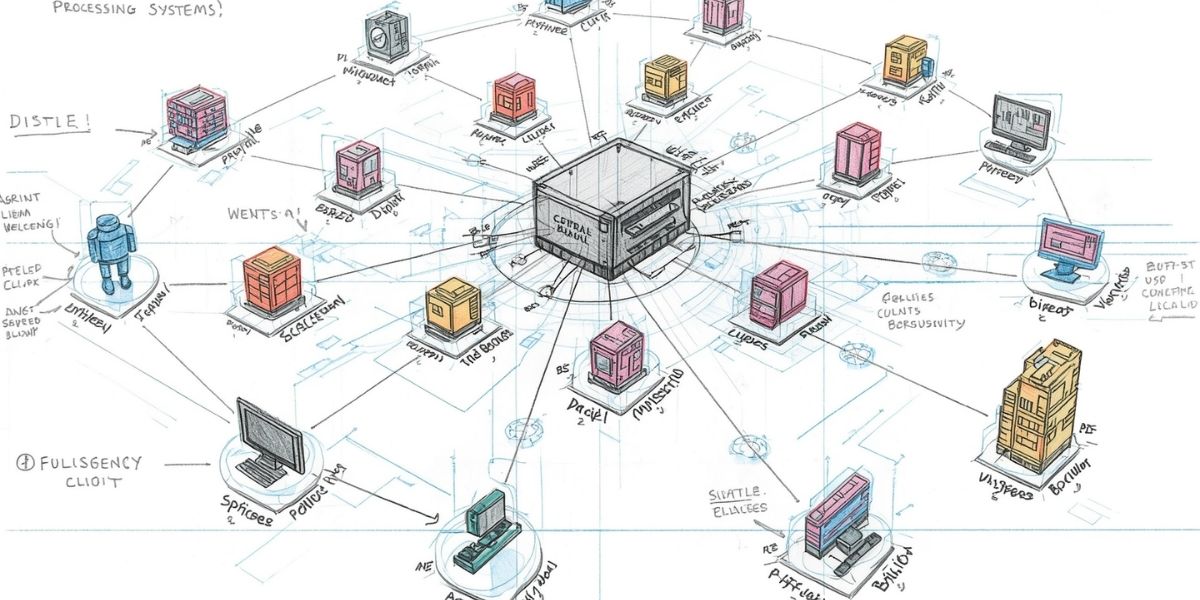
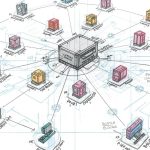
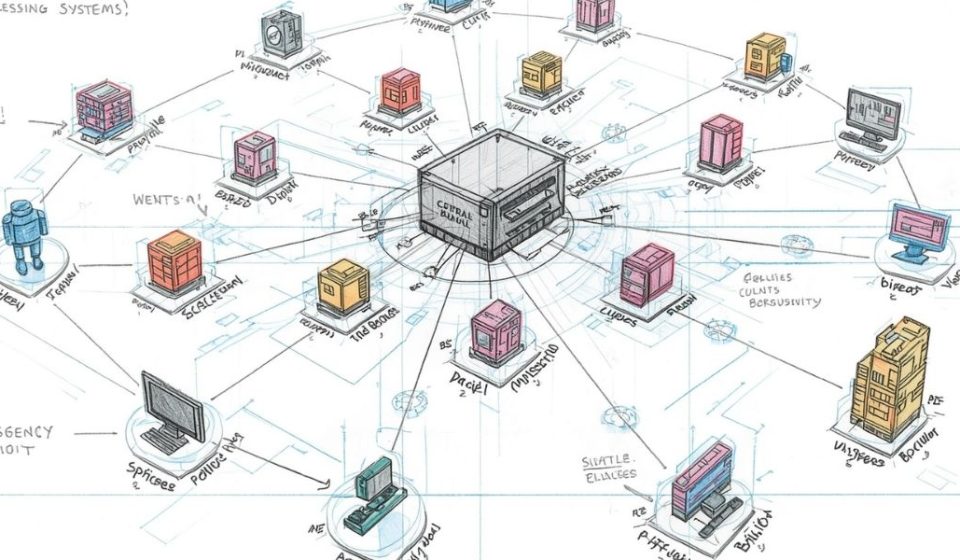
Understanding the architecture of multi-agent AI systems is essential for designing effective solutions. While implementations vary, most production multi-agent systems follow a common architectural pattern consisting of several key components.
Agent Layer: Each agent in the system is an autonomous entity with its own set of instructions, tools, and capabilities. Agents can be powered by large language models, specialized machine learning models, rule-based systems, or a combination thereof. Each agent has a clearly defined role and operates semi-independently, making decisions within its domain of expertise.
Communication Layer: Agents need to share information, coordinate their actions, and synchronize their efforts. The communication layer defines how agents exchange messages, what data formats they use, and how they handle asynchronous communication. Common patterns include direct message passing, publish-subscribe systems, and shared memory through vector databases or knowledge graphs.
Orchestration Layer: This is the brain of the system. The orchestrator manages the overall workflow, decides which agent should act next, handles task dependencies, and ensures the system progresses toward its goal. Orchestration patterns include sequential pipelines, parallel fan-out/fan-in workflows, hierarchical command structures, and dynamic routing based on agent capabilities.
Memory and State Management: Effective multi-agent systems maintain shared context and state. This includes short-term working memory for the current task, long-term knowledge bases that persist across sessions, and individual agent memory for domain-specific information. Vector databases like Pinecone and Weaviate are commonly used to manage semantic memory at scale.
Tool and Resource Layer: Agents typically need access to external tools and resources to perform their functions. This might include web browsers, code interpreters, database access, API integrations, file systems, and domain-specific tools. The tool layer provides a standardized interface for agents to discover and use these resources securely.
| Architecture Pattern | Description | Best Use Case |
| Sequential Pipeline | Agents execute in a fixed order | Content creation, data processing pipelines |
| Hierarchical | A supervisor agent delegates to sub-agents | Complex research, project management |
| Parallel Fan-Out/Fan-In | Multiple agents work simultaneously on sub-tasks | Multi-perspective analysis, batch processing |
| Dynamic Routing | An orchestrator selects agents based on context | Customer service, flexible workflows |
| Blackboard | Agents share a common workspace | Collaborative problem solving, design tasks |
Top Frameworks and Tools for Multi-Agent Orchestration

The rapidly growing multi-agent ecosystem has produced a rich set of frameworks and platforms. Choosing the right one depends on your technical requirements, team expertise, and the complexity of your use case. Here are the leading frameworks in 2026:
LangGraph: Developed by LangChain, LangGraph is perhaps the most widely adopted framework for building multi-agent AI systems. It provides a graph-based architecture where nodes represent agents or processing steps, and edges define the flow of information. LangGraph excels at building stateful, cyclic agent workflows and integrates seamlessly with LangChain’s extensive ecosystem of tools and integrations. Its visual debugging tools make it particularly attractive for teams that need to understand and optimize complex agent interactions.
Microsoft AutoGen: AutoGen is a flexible, open-source framework from Microsoft Research that enables the creation of multi-agent conversations. It supports conversational patterns where agents can chat with each other, with human participants, or both. AutoGen’s strength lies in its simplicity and flexibility. You can define agents with just a few lines of code, and the framework handles message routing, tool execution, and conversation management automatically. It also supports code execution sandboxes, making it ideal for agents that need to write and run code.
CrewAI: CrewAI is designed specifically for building collaborative AI agent teams. It provides a high-level API for defining agents with specific roles, goals, and backstories, then orchestrating their interactions using structured workflows. CrewAI is particularly well-suited for business-oriented applications like research, content generation, and analysis. Its intuitive syntax makes it accessible to developers with limited AI experience while still providing the depth needed for complex applications.
Google’s Vertex AI Agent Builder: For organizations invested in the Google Cloud ecosystem, Vertex AI Agent Builder provides a managed platform for building and deploying multi-agent systems. It includes built-in support for grounding with Google Search, integration with enterprise data sources, and enterprise-grade security and compliance features. This platform reduces infrastructure overhead significantly but comes with the vendor lock-in considerations typical of cloud platforms.
OpenAI Swarm (Experimental): OpenAI’s Swarm framework takes a lightweight approach to multi-agent coordination. It focuses on simple handoff patterns between agents, where one agent can transfer control to another based on the conversation context. While less feature-rich than some alternatives, Swarm’s simplicity makes it an excellent choice for teams just getting started with multi-agent patterns.
Real-World Applications and Use Cases
Multi-agent AI orchestration is being applied across a wide range of industries and use cases. Here are some of the most impactful real-world applications that are driving adoption:
Automated Software Development: Multi-agent systems are revolutionizing how software is built. A typical AI development team might include a product manager agent that defines requirements, an architect agent that designs the system, a coder agent that writes implementation code, a tester agent that generates test cases and identifies bugs, and a reviewer agent that evaluates code quality and suggests improvements. Companies like Cognition (Devin) and Factory have demonstrated systems that can autonomously complete significant software engineering tasks.
Financial Analysis and Investment Research: Investment firms are using multi-agent systems to automate the research process. One agent gathers earnings reports and market data, another analyzes financial statements, a third monitors news sentiment, a fourth builds financial models, and a final agent synthesizes all findings into an investment recommendation. These systems can process information orders of magnitude faster than human research teams.
Financial Analysis and Investment Research: Investment firms are using multi-agent systems to automate the research process. One agent gathers earnings reports and market data, another analyzes financial statements, a third monitors news sentiment, a fourth builds financial models, and a final agent synthesizes all findings into an investment recommendation. These systems can process information orders of magnitude faster than human research teams.
Customer Experience Management: Enterprise customer service is being transformed by multi-agent orchestration. Instead of a single chatbot attempting to handle every query, specialized agents manage different aspects: a routing agent classifies the inquiry, a billing agent handles payment questions, a technical support agent troubleshoots product issues, and an escalation agent manages complex cases requiring human intervention. This specialization dramatically improves resolution rates and customer satisfaction.
Customer Experience Management: Enterprise customer service is being transformed by multi-agent orchestration. Instead of a single chatbot attempting to handle every query, specialized agents manage different aspects: a routing agent classifies the inquiry, a billing agent handles payment questions, a technical support agent troubleshoots product issues, and an escalation agent manages complex cases requiring human intervention. This specialization dramatically improves resolution rates and customer satisfaction.
Challenges in Multi-Agent AI Systems and How to Overcome Them

Despite their enormous potential, multi-agent AI orchestration systems face several significant challenges that practitioners must navigate:
Coordination Overhead: As the number of agents increases, managing their interactions becomes exponentially more complex. Communication overhead can slow down the system, and the risk of agents working at cross-purposes increases. To mitigate this, design clear agent boundaries, minimize unnecessary communication, and use structured protocols rather than free-form conversation whenever possible.
Error Propagation: In a multi-agent pipeline, an error or hallucination by one agent can cascade through the entire system, producing increasingly distorted outputs. Implement robust validation checkpoints between agent handoffs, use fact-checking agents to verify critical outputs, and design fallback mechanisms that allow the system to recover gracefully from errors.
Cost Management: Running multiple LLM-powered agents can become expensive quickly, especially when dealing with large context windows and frequent API calls. Optimize costs by using smaller, cheaper models for simpler tasks, caching frequently accessed information, minimizing redundant processing, and implementing intelligent routing that sends tasks to the most cost-effective agent capable of handling them.
Cost Management: Running multiple LLM-powered agents can become expensive quickly, especially when dealing with large context windows and frequent API calls. Optimize costs by using smaller, cheaper models for simpler tasks, caching frequently accessed information, minimizing redundant processing, and implementing intelligent routing that sends tasks to the most cost-effective agent capable of handling them.
Security and Trust: Multi-agent systems that access sensitive data or make decisions with real-world consequences require robust security measures. Implement strict access controls, validate all inputs and outputs, sandbox code execution, and maintain audit trails for all agent actions. Zero-trust architectures are particularly appropriate for multi-agent environments.
Best Practices for Designing Effective Agent Teams

Designing effective multi-agent systems requires a combination of technical expertise, system design thinking, and practical experience. Here are the best practices that leading practitioners recommend:
- Start with a clear problem definition. Before designing your agent team, precisely define what problem you are solving and what success looks like. Ambiguous goals lead to ambiguous agent behaviors. Write a detailed specification of inputs, outputs, constraints, and quality criteria.
- Give each agent a single, clear responsibility. The most effective agent teams follow the single responsibility principle. An agent that tries to do too many things will do none of them well. Define tight scopes and let agents specialize deeply in their domain.
- Design clear interfaces between agents. Define exactly what data each agent receives, what it produces, and how it communicates with other agents. Standardized interfaces reduce coupling between agents and make the system easier to test, debug, and modify.
- Implement iterative refinement. Rather than expecting perfect output from a single pass, design systems that allow agents to review and improve their own outputs or the outputs of other agents. Multi-agent review cycles can dramatically improve quality.
- Build in human oversight. For high-stakes applications, design your orchestration to include human-in-the-loop checkpoints. This allows human experts to validate critical decisions, correct errors, and provide guidance without slowing down the entire system.
- Test with adversarial inputs. Multi-agent systems can behave unpredictably when faced with edge cases or adversarial inputs. Invest in comprehensive testing that includes unexpected scenarios, ambiguous queries, conflicting information, and attempts to manipulate agent behavior.
- Monitor performance continuously. Deploy observability tools that track agent performance, latency, cost, and output quality in real time. Set up alerts for anomalies and regularly review system performance to identify optimization opportunities.
The Future of Multi-Agent AI Orchestration

The future of multi-agent AI orchestration is extraordinarily promising. Several trends are converging to accelerate the development and adoption of collaborative AI agent systems:
First, we are seeing the emergence of agent-to-agent communication protocols and standards. Just as the internet needed HTTP and TCP/IP to function, multi-agent systems need standardized protocols for agents to discover each other, negotiate capabilities, and exchange information reliably. Initiatives like the Agent Communication Protocol (ACP) and various open standards efforts are laying the groundwork for an interoperable agent ecosystem.
Second, self-improving agent architectures are becoming a reality. Systems that can evaluate their own performance, identify weaknesses, and adapt their strategies are moving from research to production. These meta-learning capabilities will make multi-agent systems more robust, efficient, and capable over time without requiring constant human intervention.
Third, the democratization of multi-agent development tools is accelerating. Frameworks like CrewAI, LangGraph, and AutoGen are making it increasingly easy for developers with moderate AI experience to build sophisticated multi-agent systems. As these tools mature and become more accessible, we expect to see an explosion of multi-agent applications across every industry.
Fourth, enterprise adoption is reaching an inflection point. Major consulting firms, technology vendors, and industry leaders are investing heavily in multi-agent capabilities. The ability to deploy autonomous agent teams that can handle complex business processes is becoming a genuine competitive differentiator, and organizations that delay adoption risk falling behind.
Multi-agent AI orchestration represents a fundamental shift in how we think about and deploy artificial intelligence. By enabling AI agents to collaborate, specialize, and coordinate, we can tackle problems of far greater complexity and nuance than any single model could address. Whether you are a developer building your first agent team or an enterprise architect designing organization-wide AI systems, the principles and practices covered in this guide provide a solid foundation for success in this rapidly evolving field.
Also Read:
15+ Best Make.com AI Automation Templates

Best AI SEO Tools in 2026: Top AI SEO Software for Rankings, Tracking and Analysis

Best AI SEO Tools & Agencies in 2026: The Ultimate Guide to AI-Powered Search Dominance

Sora Shutting Down? OpenAI Confirms Sora App Shutdown — What’s Really Happening in 2026

Automate YouTube with N8N

What Are AI Search Optimization Tools? Complete Guide (2026)

Make YouTube Videos with AI Free (2026 Guide for Beginners)

🧠 Can AI Content Rank on Google in 2026? (Real Answer for Creators)

🧠 Best AI Tools for Content Creators in 2026 (Complete Guide)


