





















Table of Contents
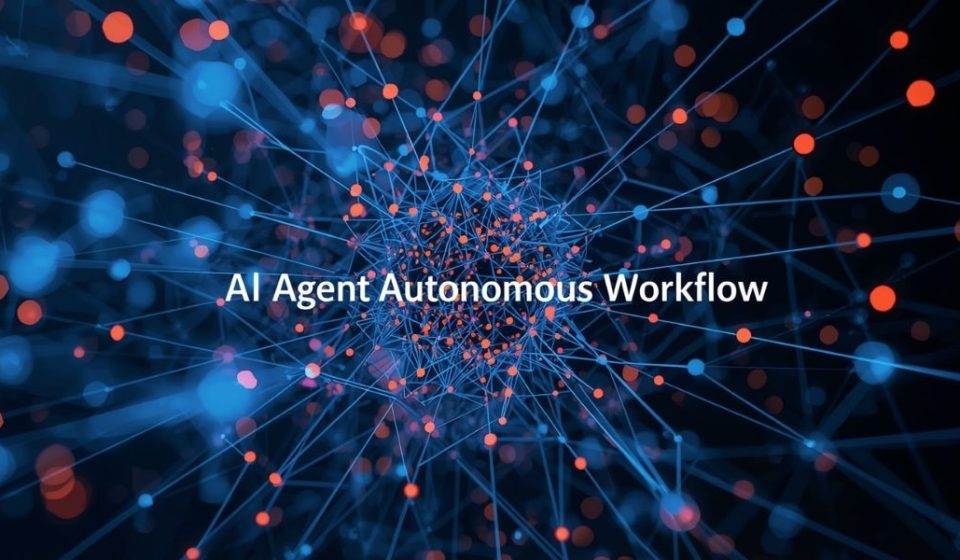
The concept of an AI agent autonomous workflow represents one of the most transformative developments in modern technology. Imagine a system that can independently receive a high-level objective, plan the necessary steps, execute tasks using appropriate tools, evaluate results, and iterate until the goal is achieved, all with minimal human intervention. This is not science fiction. In 2026, autonomous AI agents are being deployed across industries to automate complex, multi-step processes that previously required significant human time and expertise.
According to a 2025 report by Forrester Research, organizations that have implemented autonomous AI workflow systems report an average productivity increase of 40% and a 60% reduction in manual processing time. The global autonomous AI agents market is projected to reach $28.5 billion by 2028, growing at a compound annual growth rate of 34%. Whether you are a developer looking to build your first autonomous agent or a business leader exploring how self-running AI systems can transform your operations, this guide provides the comprehensive knowledge you need to succeed.
Understanding AI Agent Autonomous Workflows
An AI agent autonomous workflow is a sequence of automated actions performed by one or more AI agents to accomplish a defined objective without continuous human oversight. Unlike traditional automation, which follows rigid, pre-defined rules, autonomous workflows leverage AI to make dynamic decisions, handle unexpected situations, and adapt to changing conditions in real time.
The key distinction between traditional automation and autonomous AI workflows lies in the level of intelligence and flexibility. Traditional workflow automation tools like Zapier or Microsoft Power Automate follow deterministic rules: if this happens, do that. They are excellent for well-defined, predictable processes but break down when faced with ambiguity, nuance, or unexpected inputs. AI agent autonomous workflows, by contrast, use large language models and other AI components to interpret context, reason about problems, choose appropriate actions from a range of possibilities, and handle edge cases gracefully.
Consider a simple example: processing incoming customer emails. A traditional automation might use keyword matching to route emails to different departments. An autonomous AI workflow, on the other hand, can understand the full meaning and intent of each email, determine the appropriate response, draft a personalized reply, check relevant systems for the information needed to resolve the inquiry, and either respond automatically or escalate to a human when appropriate. The autonomous approach handles far more complex scenarios with far greater accuracy.
The spectrum of autonomy in AI workflows ranges from human-in-the-loop systems that require human approval for key decisions, to human-on-the-loop systems where humans monitor but do not intervene unless something goes wrong, to fully autonomous systems that operate independently with periodic human review. Most practical implementations fall somewhere in the middle, with appropriate safeguards built in based on the risk profile of the task.
Key Components of an Autonomous AI Workflow
Every autonomous AI workflow consists of several essential components that work together to enable intelligent, self-directed task execution. Understanding these components is critical for designing effective systems.
Objective and Task Definition: Every autonomous workflow begins with a clearly defined goal. This could be as simple as “monitor competitor pricing and alert us to significant changes” or as complex as “research this market, identify the top 10 opportunities, and create a detailed business case for each.” The quality of the objective definition directly impacts the quality of the workflow’s output. Well-defined objectives are specific, measurable, and include clear success criteria.
Planning and Reasoning Engine: The planning component breaks down the high-level objective into a sequence of actionable steps. Advanced planning engines can create multi-step plans, evaluate alternative approaches, and dynamically adjust the plan based on intermediate results. Techniques like chain-of-thought reasoning, tree-of-thought exploration, and ReAct (Reasoning + Acting) patterns are commonly used to enable sophisticated planning in AI agents.
Tool and Action Execution: Autonomous agents need tools to interact with the world beyond their language model. These tools include web browsers for research, API clients for accessing external services, code interpreters for computation, database connectors for data retrieval and storage, and specialized domain tools like CRM systems, email platforms, and project management software. The tool layer is what transforms an AI from a conversational system into an action-taking system.
Memory and Context Management: Effective autonomous workflows maintain awareness of their progress, past decisions, and accumulated information. This includes short-term memory for the current task, intermediate memory for tracking workflow state, and long-term memory that persists across multiple workflow runs. Vector databases are commonly used for semantic memory, while structured databases manage state and metadata.
Evaluation and Self-Correction: The most capable autonomous workflows include mechanisms for evaluating their own output and correcting errors. An evaluation agent might check the quality, accuracy, and completeness of each step’s output against the original objective. If the evaluation reveals problems, the system can loop back, retry with a different approach, or escalate to human oversight. This self-correction loop is what distinguishes truly autonomous systems from simple sequential pipelines.
| Component | Function | Example Technologies |
| Planning Engine | Breaks objectives into actionable steps | ReAct, Tree of Thoughts, Plan-and-Execute |
| Tool Execution | Interacts with external systems | LangChain Tools, OpenAI Function Calling |
| Memory System | Stores and retrieves context | Pinecone, ChromaDB, Redis |
| Evaluation Layer | Assesses output quality and correctness | LLM-as-judge, custom validators |
| Orchestrator | Manages workflow flow and state | LangGraph, Temporal, n8n |
How to Design Your First Autonomous AI Agent

Designing your first autonomous AI agent can seem daunting, but a structured approach makes the process manageable and rewarding. Here is a step-by-step framework to guide you through the process:
Step 1: Choose a Narrow, Well-Defined Use Case. Resist the temptation to build a general-purpose autonomous agent as your first project. Instead, choose a specific, repeatable task where the value of automation is clear and the requirements are well understood. Good first projects include automated competitor monitoring, content research and summarization, data extraction and formatting, social media sentiment tracking, or automated customer inquiry triage.
Step 2: Map the Workflow Manually First. Before automating anything, perform the task yourself and document every step in detail. What information do you need to start? What tools do you use? What decisions do you make at each step? How do you evaluate the results? This manual mapping reveals the full complexity of the task and helps you design an automation that covers all necessary steps.
Step 3: Design the Agent Architecture. Based on your manual workflow mapping, design the agent’s architecture. Decide whether a single agent is sufficient or if multiple specialized agents are needed. Define the tools each agent needs, the information flow between components, and the decision points where the agent needs to reason about what to do next. Start with a simple architecture and add complexity only as needed.
Step 4: Select Your Framework and Tools. Choose a development framework that matches your technical skill level and project requirements. For beginners, frameworks like CrewAI or AutoGen offer the easiest entry points. For more complex workflows, LangGraph provides greater flexibility and control. Select your LLM provider (OpenAI, Anthropic, or open-source alternatives) based on the reasoning capabilities, speed, and cost requirements of your use case.
Step 5: Implement, Test, and Iterate. Build your autonomous workflow incrementally. Start with the core functionality and test each component individually before integrating them. Use comprehensive logging to trace the agent’s decision-making process. Test with a variety of inputs, including edge cases and ambiguous scenarios. Refine your prompts, tools, and evaluation criteria based on test results. Expect to iterate multiple times before achieving reliable performance.
Step 6: Add Monitoring and Safeguards. Before deploying your autonomous workflow to production, implement monitoring dashboards that track key performance indicators, error rates, and cost. Add alerting for anomalous behavior. Implement rate limiting, access controls, and data validation. For high-stakes workflows, include human approval checkpoints at critical decision points.
Best Tools for Building AI Agent Workflows
The tooling landscape for building autonomous AI workflows has matured significantly in 2026. Here are the most capable and widely-used platforms, categorized by their primary strengths:
| Tool | Type | Strengths |
| LangGraph | Code Framework | Flexible graph-based workflows, state management |
| CrewAI | Agent Framework | Easy team-based agent creation, role-based design |
| Microsoft AutoGen | Agent Framework | Conversational patterns, code execution |
| n8n | Visual Workflow Builder | No-code/low-code workflow automation with AI |
| Temporal | Workflow Orchestrator | Durable execution, reliability at scale |
| OpenAI Assistants API | Cloud Service | Managed agents with built-in tools |
| Anthropic MCP | Protocol | Standardized tool integration, security-first |
For developers comfortable with Python or TypeScript, LangGraph and CrewAI offer the most powerful and flexible options. LangGraph’s graph-based architecture gives you fine-grained control over workflow logic, state management, and error handling. CrewAI’s role-based abstractions make it easy to define collaborative agent teams with clear responsibilities.
For teams that prefer visual, no-code approaches, n8n has emerged as the leading choice. Its workflow builder allows you to visually design complex AI agent workflows by connecting nodes that represent different actions, decisions, and data transformations. n8n includes built-in integrations with hundreds of services and AI models, making it possible to build sophisticated autonomous workflows without writing code.
Anthropic’s Model Context Protocol (MCP) deserves special attention as a growing standard for tool integration in AI workflows. MCP provides a standardized way for AI agents to discover, authenticate with, and use external tools and data sources. By adopting MCP, you ensure your autonomous workflows can leverage a broad ecosystem of tools while maintaining strong security and access controls.
Real-World Examples of Autonomous AI Workflows

To understand the practical impact of autonomous AI workflows, let us examine several real-world implementations across different industries:
Automated Financial Reporting: A mid-size investment firm deployed an autonomous AI workflow to generate weekly market analysis reports. The system automatically gathers data from multiple financial APIs, scans relevant news articles and earnings reports, analyzes trends and anomalies, generates a comprehensive written report with charts and data tables, and distributes it to stakeholders via email. What previously took a team of three analysts two full days now runs autonomously in under four hours with comparable or better quality.
E-Commerce Inventory Management: An online retailer implemented an autonomous workflow that continuously monitors inventory levels, predicts demand based on historical data and market trends, automatically places purchase orders with suppliers when stock falls below dynamic thresholds, adjusts pricing based on competitor analysis, and generates alerts for potential supply chain disruptions. The system reduced stockout incidents by 73% and decreased excess inventory by 45%, saving the company over $2 million annually.
Software Quality Assurance: A technology company built an autonomous testing workflow that automatically reviews every code commit, generates test cases based on the code changes and requirements, executes the tests across multiple environments, identifies and categorizes failures, creates detailed bug reports with reproduction steps, and even suggests potential fixes. The system catches 85% of bugs before they reach staging, reducing QA cycle time from three days to four hours.
Healthcare Patient Follow-Up: A hospital network deployed an autonomous workflow for post-discharge patient monitoring. The system automatically schedules follow-up calls, uses voice AI to conduct patient interviews, analyzes patient responses for signs of complications or medication non-compliance, escalates urgent cases to nursing staff, and maintains detailed records for physician review. The system reduced 30-day readmission rates by 22% while freeing nursing staff to focus on inpatient care.
Content Marketing Pipeline: A digital marketing agency created an autonomous content workflow that researches trending topics in their clients’ industries, generates content briefs with target keywords and audience personas, drafts blog posts and social media content, optimizes content for SEO, schedules and publishes across multiple platforms, and monitors engagement metrics to inform future content strategy. The pipeline produces 15 times more content than the previous manual process while maintaining quality scores above 90%.
Security and Ethical Considerations for Autonomous Agents

Deploying autonomous AI agents that operate with significant independence raises critical security and ethical considerations that must be addressed proactively. Unlike traditional software, autonomous agents make decisions in real time, interact with external systems, and can take actions with real-world consequences. This demands a security-first and ethics-aware approach to design and deployment.
Principle of Least Privilege: Autonomous agents should have the minimum permissions necessary to perform their designated tasks. An agent responsible for reading and summarizing documents should not have write access to production databases. Implement granular access controls, sandbox execution environments, and regular permission audits. The principle of least privilege limits the potential damage if an agent behaves unexpectedly.
Data Privacy and Compliance: Autonomous agents that process personal data must comply with applicable regulations such as GDPR, CCPA, and HIPAA. Implement data classification, enforce data handling policies, and maintain comprehensive audit trails of all data access and processing. Ensure that agents do not inadvertently store, transmit, or expose sensitive information. Consider implementing differential privacy techniques for statistical analyses.
Transparency and Explainability: Stakeholders should be able to understand how autonomous agents make decisions. Implement detailed logging of agent reasoning, tool usage, and decision points. Create dashboards that visualize the agent’s decision flow in real time. For high-stakes decisions, require agents to provide explanations alongside their outputs. Explainability is not just an ethical requirement; it builds trust and enables effective human oversight.
Bias and Fairness: AI agents can perpetuate or amplify biases present in their training data or tool integrations. Regularly audit agent outputs for signs of bias across protected characteristics. Implement fairness metrics and monitoring. Ensure diverse training data and perspectives when developing agent prompts and decision criteria. For decisions affecting people, such as hiring recommendations or loan approvals, implement additional review mechanisms.
Human Oversight and Intervention: No matter how sophisticated, autonomous AI agents should include mechanisms for human oversight and intervention. Implement kill switches that can immediately halt agent execution. Create clear escalation paths for agents to request human guidance. Establish regular review cycles where humans audit agent performance and decisions. The goal is not to eliminate human involvement but to shift it from manual execution to strategic oversight.
Measuring Success: KPIs for AI Agent Workflows
To ensure your autonomous AI workflows deliver real value, you need to establish clear key performance indicators (KPIs) and track them consistently. The right KPIs depend on your specific use case, but here are the most important metrics that apply broadly to AI agent autonomous workflow systems:
| KPI Category | Metric | Description |
| Efficiency | Task Completion Time | Average time from initiation to goal achievement |
| Quality | Output Accuracy Rate | Percentage of outputs meeting quality standards |
| Reliability | Success Rate | Percentage of workflow runs completed without errors |
| Cost | Cost Per Task | Total API and infrastructure cost divided by tasks completed |
| Adoption | Autonomous Completion Rate | Percentage of tasks completed without human intervention |
| Impact | ROI | Value generated minus implementation and operating costs |
Start with a focused set of three to five KPIs that align with your primary business objectives. For workflows focused on cost reduction, prioritize cost per task and efficiency metrics. For quality-focused workflows, emphasize accuracy and reliability. For workflows aimed at scaling operations, track the autonomous completion rate and throughput.
Establish baseline measurements before deploying your autonomous workflow, then track performance trends over time. Most autonomous AI systems improve over their first few months of operation as you refine prompts, optimize tool usage, and adjust evaluation criteria. Set realistic expectations for initial performance and plan for an iterative improvement cycle. Organizations that measure rigorously and iterate consistently achieve the best long-term results from their AI agent autonomous workflow investments.
Building effective autonomous AI workflows is both an art and a science. It requires technical expertise in AI and software engineering, thoughtful system design, careful attention to security and ethics, and a commitment to continuous measurement and improvement. By following the principles and practices outlined in this guide, you can build self-running AI systems that deliver genuine business value, free your team from repetitive tasks, and position your organization at the forefront of the autonomous AI revolution.
Also Read:
15+ Best Make.com AI Automation Templates

Best AI SEO Tools in 2026: Top AI SEO Software for Rankings, Tracking and Analysis

Best AI SEO Tools & Agencies in 2026: The Ultimate Guide to AI-Powered Search Dominance

Sora Shutting Down? OpenAI Confirms Sora App Shutdown — What’s Really Happening in 2026

Automate YouTube with N8N

What Are AI Search Optimization Tools? Complete Guide (2026)

Make YouTube Videos with AI Free (2026 Guide for Beginners)

🧠 Can AI Content Rank on Google in 2026? (Real Answer for Creators)

🧠 Best AI Tools for Content Creators in 2026 (Complete Guide)


